ABS Plastic Staff Lockers vs. Metal Lockers: Which Storage Solution Is Better for Modern Office Buildings?
The modern office is no longer just a place to sit 9-to-5; it is a dynamic hub of collaboration, hybrid work, and flexible “hot-desking.” As the traditional assigned cubicle disappears, the need for secure, personal storage has skyrocketed.
For decades, the default choice for facility managers was the cold, grey steel locker. It was functional, but strictly utilitarian—reminiscent of high school hallways or industrial factory floors.
However, as office design shifts towards “Resimercial” (residential + commercial) aesthetics and open-plan layouts, a new contender has emerged: High-Density ABS Plastic Lockers.
If you are an office manager, interior designer, or procurement officer planning a fit-out, you are likely facing the dilemma: Do you stick with traditional metal, or upgrade to ABS plastic?
In this detailed comparison, we analyze durability, aesthetics, acoustics, and long-term value to help you decide which solution fits the modern workplace.
1. Aesthetics and Design Flexibility
The Metal Locker Reality: Metal lockers have a distinct “industrial” look. While some manufacturers offer painted options, the texture and finish often feel cold and rigid. Over time, paint chips, scratches appear, and the unit begins to look worn, which can detract from a carefully designed office interior.
The ABS Plastic Advantage: ABS (Acrylonitrile Butadiene Styrene) lockers are designed for the modern eye.
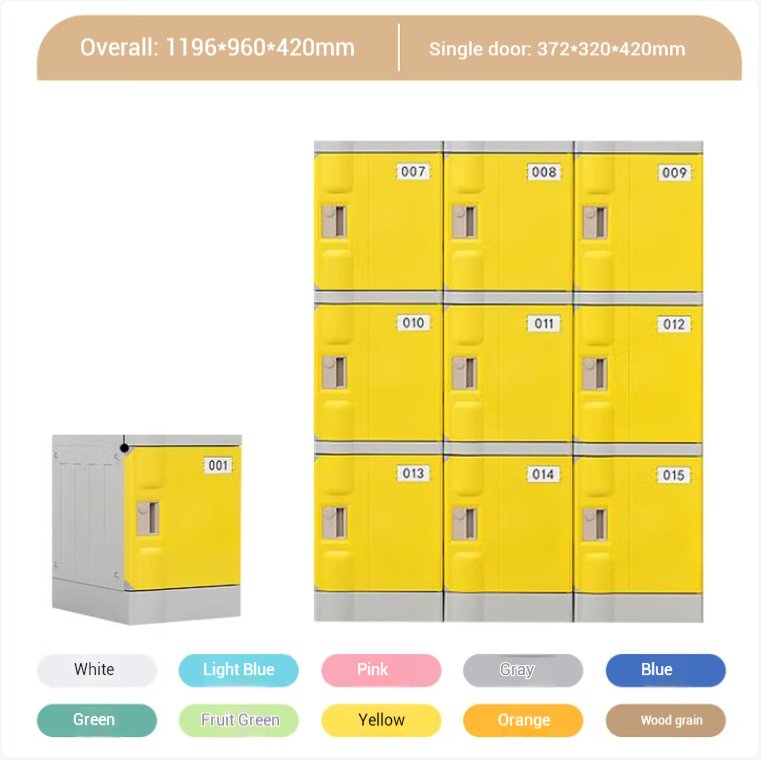
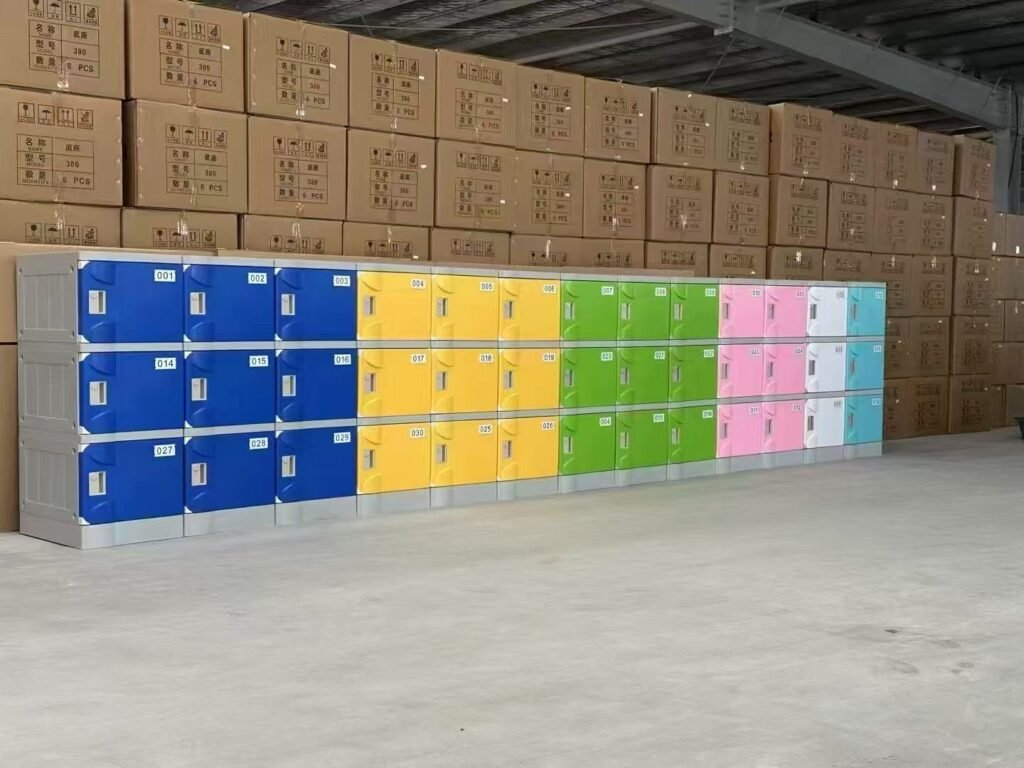
- Vibrant Customization: Because the color is molded into the plastic rather than painted on, ABS lockers offer vibrant, matte finishes that match company branding (e.g., Blue, Yellow, Grey, or custom Pantone colors).
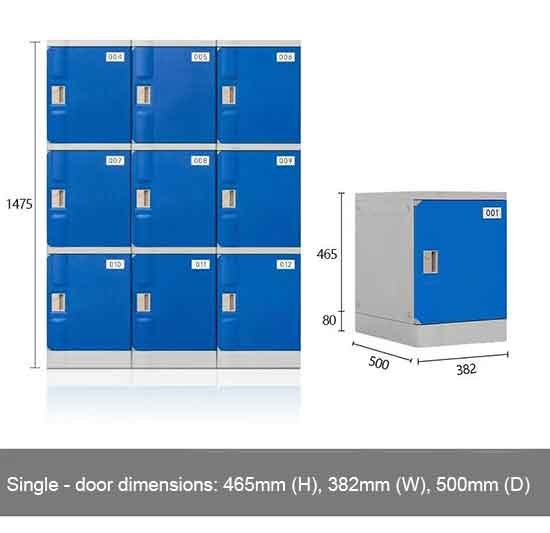
- Modular Configuration: Unlike fixed metal banks, ABS lockers are modular. They can be stacked like LEGO blocks. You can create unique shapes—staircase patterns under sloping roofs, low islands in the middle of a room, or floor-to-ceiling walls.
- Verdict: If you want your office to look warm, inviting, and aligned with your brand identity, ABS wins hands down.
2. Noise Pollution: The “Clang” Factor
The Metal Locker Reality: In an open-plan office, noise control is critical for productivity. Metal lockers are notoriously noisy. The sound of a metal door slamming shut, or keys jangling against a steel frame, creates a sharp, high-pitch reverberation (“The Clang”) that travels across the office floor, disturbing focused work.
The ABS Plastic Advantage: ABS lockers are acoustically superior.
- Sound Dampening: Plastic naturally absorbs sound rather than reflecting it. Closing an ABS door produces a dull, quiet thud rather than a sharp bang.
- Soft-Close Engineering: Many high-end ABS lockers (like those from Luoyang Hengna) feature design elements that further cushion the closing mechanism.
- Verdict: For libraries, call centers, and quiet zones, ABS is the only professional choice.
3. Durability: Rust, Dents, and Maintenance
This is where the Total Cost of Ownership (TCO) comes into play.
The Metal Locker Reality:
- Denting: Thin-gauge steel dents easily. A kick, a heavy bag, or an accidental cart collision can permanently deform the door, making it hard to close.
- Rust: Even in air-conditioned offices, humidity (or wet umbrellas/coats) can cause metal to rust over time, especially at the hinges and base.
- Scratching: Once the paint is scratched, the metal underneath is exposed to oxidation.
The ABS Plastic Advantage:
- High Impact Resistance: ABS is an engineering-grade plastic (used in safety helmets). It is flexible; if it takes a hit, it absorbs the shock and bounces back. No dents.
- 100% Rustproof: You could submerge an ABS locker in a swimming pool, and it would never rust. This makes them perfect for office gyms or end-of-trip facilities (shower rooms).
- Scratch Concealment: Since the material is the same color all the way through, surface scratches are barely visible.
- Verdict: ABS lockers last significantly longer (15+ years) without looking “aged.”
4. Hygiene and Maintenance
Post-pandemic, office hygiene is a top priority.
- Cleaning Metal: Metal lockers require specific cleaners to avoid damaging the paint. If water is used too liberally, it risks rust.
- Cleaning ABS: ABS plastic is non-porous and waterproof. The cleaning crew can wipe them down with strong disinfectants, or even wash them with water, without damaging the structural integrity.
- Safety: Metal lockers often have sharp edges or burrs where the steel is folded. ABS lockers are injection molded with rounded, soft corners, preventing snagged sweaters and scratched skin.
At a Glance: The Comparison Matrix
To summarize the differences, here is a direct comparison based on key performance indicators (KPIs) for facility management.
| Feature | ABS Plastic Lockers | Traditional Metal Lockers |
| Rust Resistance | ✅ 100% Waterproof & Rustproof | ❌ Prone to rust over time |
| Impact Resistance | ✅ High (Bounces back) | ❌ Low (Dents permanently) |
| Noise Level | ✅ Quiet / Sound Absorbing | ❌ Noisy / Clanging |
| Aesthetics | ✅ Modern, Colorful, Matte | ⚠️ Industrial, Cold, Painted |
| Modularity | ✅ DIY Stackable & Reconfigurable | ⚠️ Rigid / Fixed Banks |
| Safety | ✅ Rounded Soft Corners | ⚠️ Sharp Metal Edges |
| Lifespan | ✅ Long (15+ Years) | ⚠️ Medium (5-10 Years) |
Which is Better for Your Office?
While metal lockers may have a slightly lower upfront cost, they are a legacy solution that struggles to meet the demands of the modern, agile workplace.
For warehouses or back-of-house storage, metal may still suffice. However, for modern office buildings, tech hubs, co-working spaces, and corporate headquarters, ABS Plastic Lockers are the superior choice.
They offer a cleaner look, a quieter environment, and a durability that ensures your investment looks brand new for years to come.
Ready to upgrade your office storage? Don’t let rusty, noisy lockers ruin your office vibe. Explore the next generation of storage.
Luoyang Hengna Office Furniture is a leading manufacturer of premium ABS plastic lockers. We offer customizable colors, smart lock integration, and modular designs tailored for the global market.